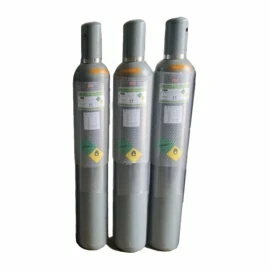
Among common oxidizing agents, fluorine gas has the strongest oxidizing power, and correspondingly, fluoride ions have the weakest reducing power. In fact, only a few compounds can oxidize fluoride ions to produce fluorine gas, and this is basically a disproportionation reaction.
Substances with "high," "heavy," or "peroxide" in their names, such as perchlorates, permanganates, dichromates, and sodium peroxide, belong to this category. Common oxidizing agents include oxygen (or air), chlorine, sodium dichromate, potassium dichromate, potassium permanganate, and nitric acid. Common substances in this category include: chlorates: ClO3-; perchlorates: ClO4-; inorganic peroxides: Na2O2, K2O2, MgO2, CaO2, BaO2, H2O2; nitrates: NO3-; permanganates: MnO4-.