

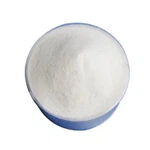


Agrochemical Raw Material(TC)
Product Overview
This technical-grade (TC) agrochemical raw material serves as the active industrial ingredient for crop protection formulation manufacturing. Supplied at purity levels of 96.0 percent minimum, the material functions as the primary active substance for processing into end-use formulations, including Emulsifiable Concentrates (EC), Suspension Concentrates (SC), Wettable Powders (WP), and Water Dispersible Granules (WDG).
Targeting formulators and regional distributors, each production lot undergoes high-performance liquid chromatography and wet chemistry analysis to verify active ingredient concentration and impurity profiles. Shipments comply with international chemical transport protocols and are accompanied by a lot-specific Certificate of Analysis, Material Safety Data Sheet, and batch manufacturing records.


Product Specifications
|
Parameter |
Specification Standard |
Test Method |
|
Active Ingredient (AI) |
Greater than or equal to 96.0 percent (Customizable grades: 95.0 percent to 99.0 percent) |
CIPAC / HPLC |
|
Appearance |
White to pale yellow crystalline powder or viscous liquid |
Visual Inspection |
|
Water Content |
Less than or equal to 0.5 percent weight by weight |
Karl Fischer Titration |
|
Acetone Insoluble |
Less than or equal to 0.1 percent weight by weight |
Gravimetric Analysis |
|
Acidity (as sulfuric acid) |
Less than or equal to 0.2 percent weight by weight |
Titrimetric Method |
|
pH Value (1 percent aqueous suspension) |
4.0 to 7.0 |
Potentiometric Determination |

Emulsifiable Concentrate Processing: Blended with aromatic hydrocarbon solvents and non-ionic or ionic emulsifiers for foliar application in cereal and horticultural crop protection.
Suspension Concentrate Manufacturing: Wet-milled with polymeric dispersants and antifreeze agents to yield water-based liquid formulations for broad-acre pest management.
Wettable Powder and Water Dispersible Granule: Compounded with mineral carriers and wetting agents for solid agricultural tank-mixing and dusting.
Seed Treatment: Utilized in low-volume seed coating formulations for early-stage systemic protection against soil-borne pathogens and chewing insects.
Manufacturing and Quality Control
Production Process
Synthesis utilizes continuous-flow reaction systems equipped with automated temperature and pressure control. Reaction endpoints are monitored via in-line gas chromatography to maintain chemical conversion rates above 98 percent. Crude intermediates undergo fractional vacuum distillation and multi-stage crystallization to remove structural isomers and heavy metal by-products prior to final flash-drying.
Quality Control Protocol
• Chromatographic Verification: Every production lot is tested via liquid and gas chromatography to quantify active ingredient concentration and detect trace synthesis impurities.
• Physical Property Testing: Particle size distribution via laser diffraction, melting point determination, and moisture analyzers verify physical compliance.
• Traceability and Retention: Retained samples from every batch are archived in climate-controlled storage for 24 months. Complete batch manufacturing records are maintained for audit verification.
• Compliance Standards: Manufacturing facilities operate under standard international quality management frameworks. Third-party pre-shipment inspections are fully supported upon request.
Packaging Options
• Solid Technical Materials: 25 kilogram fiber drums with inner heat-sealed low-density polyethylene liners; 500 kilogram woven polypropylene flexible intermediate bulk containers with polyethylene inner liners.
• Liquid Technical Materials: 200 liter high-density polyethylene uncertified drums; 1,000 liter intermediate bulk containers.
Storage and Handling
Store in cool, dry, and well-ventilated dedicated chemical warehouses equipped with secondary containment systems.
Keep containers tightly sealed to prevent moisture absorption and photo-degradation. Maintain storage temperatures between 0 degrees Celsius and 30 degrees Celsius away from direct sunlight, strong oxidizers, and foodstuff storage zones.

FAQ